How AI Is Already Having a Significant Impact on Cancer Care: A Conversation With Sandip Pravin Patel, MD, FASCO
Three education sessions presented during the 2025 ASCO Annual Meeting showcased how AI is quickly transforming cancer care from clinical trial planning and ambient scribes transcribing physician-patient conversations to therapeutic decision-making. The meeting also introduced oncologists to ASCO’s Guidelines Assistant (asco.org/guidelines/assistant), an AI-powered chat tool developed by ASCO and Google Cloud to give ASCO members rapid, interactive access to the Society’s clinical guidelines.
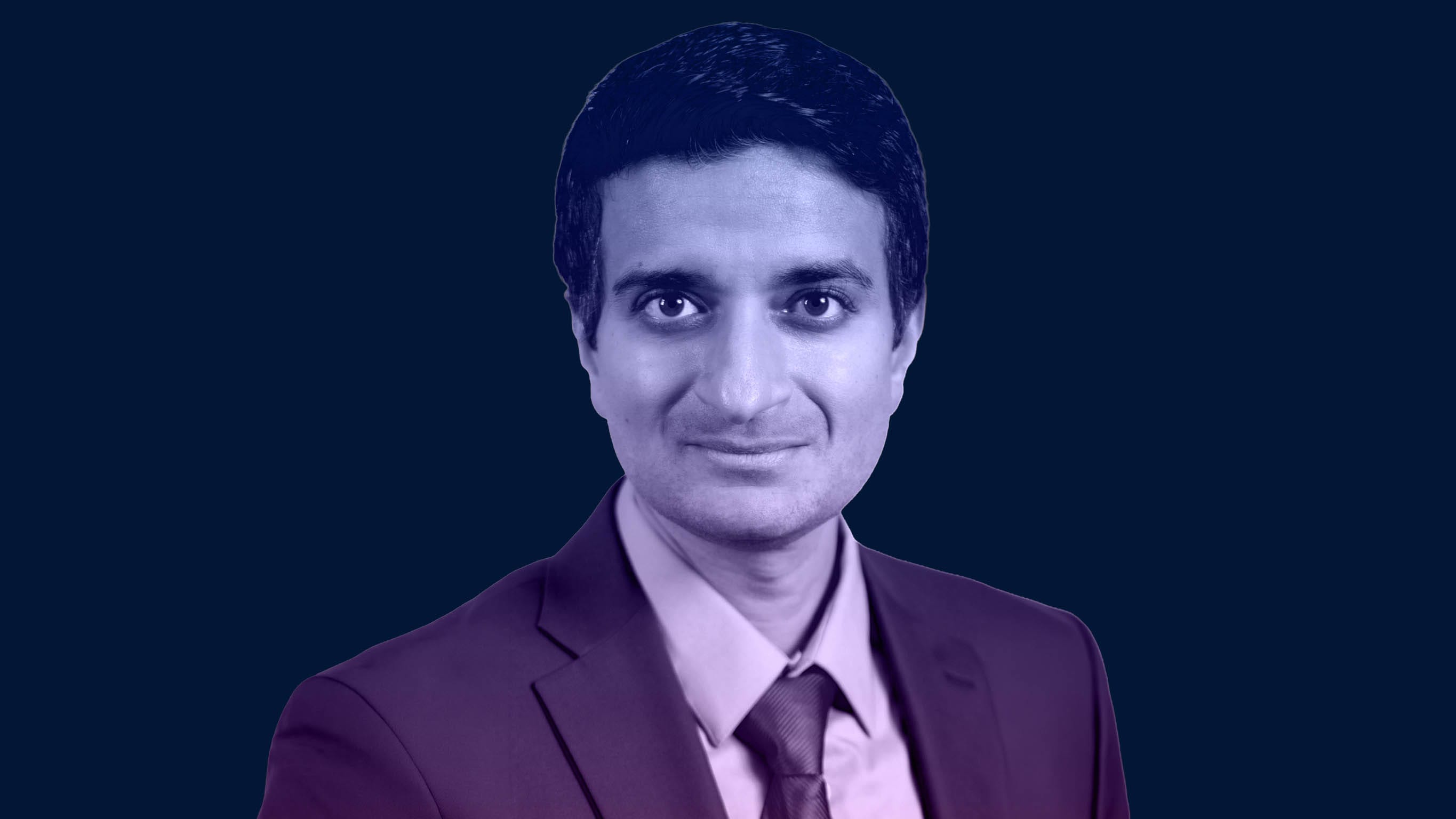
One of the sessions presented during the meeting titled “Accelerating Cancer Clinical Trials With Artificial Intelligence,” chaired by Sandip Pravin Patel, MD, FASCO, Professor of Medical Oncology at the University of California San Diego Moores Cancer Center, covered several aspects of AI’s integration into research and clinical cancer care.
In this wide-ranging interview, Dr. Patel discussed how the technology can relieve oncologists of administrative burdens by automating routine and repetitive tasks, streamlining clinical trial design and patient enrollment, and increasing human-centered oncology care.
Relieving Physicians of Burdensome Administrative Tasks
In your presentation during the 2025 ASCO Annual Meeting session on “Accelerating Cancer Clinical Trials With Artificial Intelligence,” you talked about the current state of AI use in oncology and how the technology is augmenting human function by making rote, repeatable tasks easier. For example, by deploying AI scribes to take notes during a clinical visit, freeing up oncologists’ time away from the computer and allowing them to face patients during an appointment. Can AI help restore the human touch to clinical practice, and potentially reduce physician burnout by relieving physicians of burdensome administrative tasks?
That’s an aspirational goal for this technology. Deploying ambient AI scribes to take notes during clinical visits and then having AI transcribe those notes relieves clinicians from worry about making typographical errors while typing on a computer keyboard, which is a very linear task, and using these AI scribes is low risk. No clinician is going to miss writing clinical notes. And, as you mentioned, it also allows us to focus on our patients and deliver more humanistic, compassionate, and efficient care. And it’s an additional win for patients, too, because they can have access to their clinical notes sooner.
In addition, AI can significantly expedite the prior authorization process by health systems, automating document-heavy tasks and putting them into a format that is interpretable, enabling faster decision-making for both health-care providers and insurers, so that patients can get quicker access to the treatment they need. Getting a fast “yes” or “no” on a treatment decision is a high-yield intervention. Prior authorization is such a source of burnout for physicians, it’s gotten to the point where some physicians are retiring early just to avoid this burdensome administrative task.
If we can mitigate some of the risks inherent in these large language models, such as algorithmic bias and inequity, we will be able to improve and invest more in the human aspects of cancer care for patients.
Matching the Right Patient to the Right Clinical Trial
During your presentation, you also talked about how AI-based tools can help streamline clinical trial design and more effectively screen patients for trial inclusion. How do you envision this process working; what problems can AI resolve in clinical trial design and in patient recruitment?
Most clinical researchers are laser-focused on clinical trial matching to find the appropriate patient for the appropriate trial. So, AI-assisted clinical trial matching is an area that is under investigation, although they vary wildly by the type of clinical data the model has access to.
I think one area where we are going to see the most benefit with AI is in the backend helping clinical research coordinators and data analysts take down all the data elements that are required for enrollment into a clinical trial, as well as information once enrolled, including any drug adverse events, and then putting the information into a specific database.
If we can get that process more automated using AI, it will spare research coordinators’ valuable time and allow them to spend more time with patients enrolled in clinical trials.
Personalizing Treatment and Predicting Drug Responses
There are hundreds of types of cancer, each with their own unique characteristics, genetic makeup, and behavior. In the future, how will clinical trials be designed if each patient is essentially an N-of-1?
This is another area where AI can facilitate cancer care by personalizing treatments and predicting drug responses in individual patients. We are currently seeing this happen in the first AI-driven computational pathology-based TROP2 biomarker that is being evaluated by the United States Food and Drug Administration for an antibody-drug conjugate called datopotamab deruxtecan in the treatment of non–small cell lung cancer. So, if we can use this same approach with other targets in cancer, we can envision a path to more accurately personalize therapeutics for patients.
Testing AI Models for Accuracy, Reliability, and Safety
If AI does give clinicians the potential to enable complete, accurate, personalized treatment for each patient with cancer, what will be the outcome: more cancer cures or more conversions to chronic, manageable diseases?
Currently, what AI is really good at doing is taking different datasets and weaving them into a potential single metric or outcome. We need to test AI as vigorously as we would any drug in terms of its reliability, efficacy, and safety, because we know AI models can hallucinate. And some of these hallucinations can be helpful for discovery. But many of them can have negative consequences for patients, similar to the way we may think a new drug will be great for a patient only to find out it has unexpected side effects.
We have to hold AI algorithms to the same standard as other clinical trial interventions when it comes to patient care. So, we don’t know yet what the full benefit of AI will be in terms of personalizing treatment and predicting outcomes for patients and whether more cancers will be cured as a result of this technology. But it’s important that we continue to safely test and implement novel algorithms as we would any new therapeutic in the clinical space.
Using AI to Assist in Radiology and Pathology in the Detection of Cancers
During your presentation, you talked about how one area of innovation with AI is in lung cancer screening. Also, information has been published on how the technology can help interpret mammography screening, as well as the reading of computed tomography (CT) scans in cancer staging and in therapeutic decision-making. Please talk about how AI is providing assistance in these areas of oncology; and what areas of oncology do you see the technology advancing in next?
The optimal use of AI in cancer care relates to tasks that alleviate clinicians of performing either a repetitive task or a needle-in-a-haystack type of task, so they can focus their attention on providing patient-centric care.
- Sandip Pravin Patel, MD, FASCO
There have been some really interesting studies published on how AI is augmenting mammography screening for breast cancer and in CT-based screening for lung cancer, for example, assisting radiologists in nodule detection and risk stratification, which can be difficult to do reliably across a broad population over time.
There are many nodules that can appear borderline in screening or that are not visible. AI models can actually learn to see things that the human eye cannot see. Screening for breast cancer and lung cancer is an area where we will see an increased use of AI to help our radiology colleagues detect cancers at earlier stages.
The optimal use of AI in cancer care relates to tasks that alleviate clinicians of performing either a repetitive task or a needle-in-a-haystack type of task, so they can focus their attention on providing patient-centric care.
Testing the Reliability of AI Answers
Please talk about the vulnerabilities of this technology. What should oncologists be wary of with AI?
The biggest vulnerability in this area is the lack of prospective validation in clinical trials. The risk of a hallucination that appears very confident by the AI model can be a major challenge for clinicians. AI doesn’t have a theory of knowledge in the same way humans do to check their work, so it’s important that a human reviews AI output before any clinical intervention.
A good example of this is how we as humans do math. We can say with confidence that 2+2=4. However, if you asked me a very complex math question, you might hear some inflection in my voice indicating that I’m not sure of the answer. AI is always going to express the same exact tone of voice whether it knows the right answer to a question or not. So, currently, using AI to help make personalized medical decisions, for example, is high risk.
Being confidently incorrect is one of the major weaknesses of large language models. The other major concern is that if AI doesn’t have all of the data or medical expertise needed to make an accurate treatment suggestion and hallucinates the missing elements, there’s no real way for clinicians to be confident in the feedback they are getting from AI models.
Not having a way to test the reliability of an answer generated by AI is a major barrier in using this technology for unsupervised medical decision-making. But with proper supervision, this technology can help streamline clinical workflows.
Putting the Human Touch at the Heart of Oncology Care
How do you envision AI changing oncology practice over the next 2 to 5 years; and what will be the benefit to patients and clinicians?
The biggest immediate improvement from using AI in cancer care will be AI medical scribing or ambient AI documentation during clinical visits to convert conversations between clinicians and their patients into structured clinical notes automatically.
I used to worry about forgetting something a patient told me during an office visit, so I would sit in front of my computer typing our conversations. I’m sure my patients would rather I face them during these clinical visits, but my fear was that I would forget what they said and that I would miss important information. AI scribing helps avoid this issue by automatically recording, transcribing, and summarizing conversations, AI scribe allows me to spend more time talking with my patients, face-to-face, listening to their concerns, and putting the human touch at the heart of oncology care.
I think the use cases for AI in the immediate future relate to augmenting pathologic and radiographic diagnoses as well as streamlining clinical workflows to allow clinicians to focus on the more human and interactive tasks that our patients with cancer expect us to help with in their care.
DISCLOSURES: Dr. Patel is a scientific advisor for Amgen, AstraZeneca, Bristol-Myers Squibb, Daiichi Sankyo, Eli Lilly, Fate, Gilead, Merck, Pfizer, Roche/Genetech, and TScan Therapeutics. His university receives research funding from Amgen, AstraZeneca, A2bio, Bristol-Myers Squibb, Corbus, Eli Lilly, Fate, Gilead, Merck, Pfizer, Roche/Genentech, TScan Therapeutics.
ASCO AI in Oncology is published by Conexiant under a license arrangement with the American Society of Clinical Oncology, Inc. (ASCO®). The ideas and opinions expressed in ASCO AI in Oncology do not necessarily reflect those of Conexiant or ASCO. For more information, see Policies.
Performance of a convolutional neural network in determining differentiation levels of cutaneous squamous cell carcinomas was on par with that of experienced dermatologists, according to the results of a recent study published in JAAD International.
“This type of cancer, which is a result of mutations of the most common cell type in the top layer of the skin, is strongly linked to accumulated [ultraviolet] radiation over time. It develops in sun-exposed areas, often on skin already showing signs of sun damage, with rough scaly patches, uneven pigmentation, and decreased elasticity,” stated lead researcher Sam Polesie, MD, PhD, Associate Professor of Dermatology and Venereology at the University of Gothenburg and Practicing Dermatologist at Sahlgrenska University Hospital, both in Gothenburg, Sweden.